
Walking Forward with my Broken Heart
Aug 27, 2026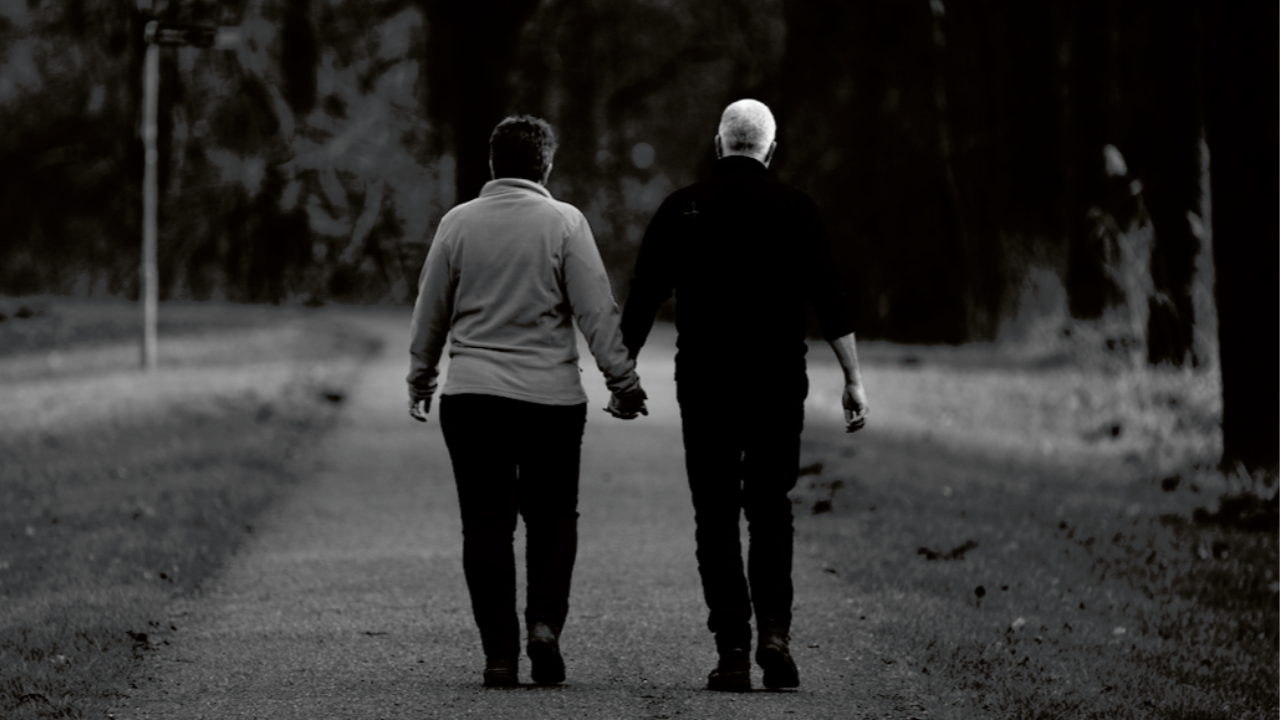
Dearest friends,
I wrote this in 2013, and I'm including it here, unedited, because it is still relevent, and that is largely the point. This moment often feels uniquely terrible, and we feel despair, but in fact, meeting these challenges are an ongoing part of being human, and we can draw strength from knowing that we and others have always gone through incredibly hard times, and still there is joy.
I see in this article the seeds of my Blissipline work and the seeds of the understanding that supports me know in knowing that this moment, like every moment, offers us the choice to live from love or from fear. Choosing love, over and over, has changed my life in ways I could hardly have imagined.
We are living with a lot of fear and pain these days. From the bombings at the Boston Marathon, to the terrible shooting of ten children and seven adults in Connecticut last December, from the drone killings of children in Iraq, to the suffering of veterans and their families, and on and on…
And there's the suffering in our own lives: a schizophrenic mother, an abusive spouse, a miscarriage, a lost job and the fear we won't be able to take care of those we love, recovering from the devastation of a hurricane.
And then there are terrible fears of huge devastation… war, climate change… we are subjected to such a constant barrage of information these days from news and social media that it seems to me that we are all overwhelmed, and either furious, or shut down, or alternating between the two.
Alice Walker wrote a beautiful book, The Way Forward is with a Broken Heart, and this phrase has become a mantra to steady me in the face of terrible suffering.
In December of 2012, on the Friday of the shootings in Sandy Hook, Connecticut, I hadn't checked the news during the day, so I heard it in the afternoon from a client. The client who told me about it has a young daughter who at that moment was at her elementary school, in what we both believed was a safe place. We sat in stunned silence together, feeling the shock of the news and how close the tragedy was to his life.
That evening I was scheduled to teach a class on using mindfulness as a tool to deal with powerful, difficult feelings, and In the class everyone was grappling with their responses to the tragedy. Parents were feeling horror at the thought of losing a child; people of several different faiths discussed the terrible pain of feeling the fragility of their practices in the face of such violence, and everyone was reeling.
It was a powerful and intense class. I guess I can say it was a good class, in the way that Raymond Carver uses the word “good” in A Small Good Thing, his short story about another child who was violently killed. His use of the word good is painful in the extreme. The goodness of a small gesture of love in the face of incredible loss.
That weekend I was exhausted from a long week and dealing with so much suffering, and it was a relief to have some free time and a Netflix movie that I wanted to watch. It seemed a good chance to sit and allow that alternate world to take over for a couple of hours. But my choice, made months before, and nudging its slow way up the queue to arrive that week, was a film called The Stoning of Soraya M, an excruciating movie, based on a true story. It is set in a remote village in Iran at the beginning of the Ayatollah’s regime, and tells the story of a young woman’s murder as a result of the lies and manipulation by her sadistic husband who wants his wife killed so he can marry a young girl.
It’s a powerful movie, and a good movie, again in a use of the word “good” that can contain not only intense suffering, but also the important function of a voice for helping us find our way to healing. The scene of the stoning was graphic and horrific, and watching it I felt in my gut the level of brutality that is involved in stoning a human being to death. I turned off the movie in the middle of the killing, appalled and overwhelmed, even though I had known what was coming from the beginning, but after a few minutes I turned it back on and watched to the end, because, as I said, it is based on a true story, and I needed to know what happened after this young woman’s death. I walked around stunned afterwards, feeling the connections of misery from the U.S. to Iran, and across the globe.
All of this left me feeling overwhelmed and kind of zoned out. As a witness, and as a person pledged to do my best to help, I found myself spinning through hopeless thoughts like, “What can I do? How can I possibly do enough in the fact of this level of pain?"
At work the next week, I was still feeling adrift, and I took a walk on my lunch break. The sun had surprised me by breaking through the morning’s mist, and, as I felt it on my skin, I was aware how good it was to receive that warmth and light — a small good thing — and I began to wake up again to my feelings and to the beauty of the sunlight, and I reminded myself, “The way forward is with a broken heart, Mary. The way forward is with a broken heart.”
~•~•~•~•~•~•~•~•~•~•~
I have had the deep privilege of learning from teachers who have addressed terrible suffering. My primary teacher, the venerable Zen master, Thich Nhat Hahn, developed his understanding in the crucible of the war in his home country of Vietnam, witnessing violence that was as appalling as the shooting of the children in Sandy Hook, injustice and pain as terrible as the stoning of women in Iran, and as seemingly random as the bombing in Boston.
The commitment Thich Nhat Hahn made then was to not turn his back, to not condemn, to not take sides, and to not give up heart, but to simply do his best to help those who needed help, with love and steady breaths, and with a recognition of our inter-relatedness and the knowledge that their pain and our pain are one. He has inspired thousands of people to commit their lives to peaceful presence and awareness, and the work of healing themselves and their communities.
But Thich Nhat Hahn also tells us, “Suffering is not enough.” Our job as mindfulness practitioners is to bring our most skillful tools to each specific situation. And when the situation is our own suffering, we need to offer ourselves healing. What is required is that we reconnect to something beautiful, warm, loving, generous, peaceful, cool, refreshing, so we can begin to recover. The sunshine on my skin at lunch began the transition to reconnection with the great beauty that is also in the world, and reconnection to my own broken heart and my ability to love the world.
Thich Nhat Hahn also suggests that we guard our sense doors, meaning, be mindful of what we are taking in through our eyes, ears, and other senses, so that we don't overwhelm our capacity to be present and happy. We can learn to choose to direct our attention to sources that increase our well being. Social Media can be an opportunity for overwhelm, but it is also an opportunity for community. Just a few days after the Boston Marathon bombings, I saw a video of some young veterans visiting a woman in hospital who had lost both her legs in the bombings. They too had lost their legs, but they were much farther along the road of healing, and they were there to show her that she would be fine in time, and told her that her new prostheses would give her a new life that she couldn't even imagine. I was so touched at these young men making this trip to show this woman that she had a future that wasn't full of misery. After a few minutes of talking with them, she even managed to make a joke that her biggest problem with running had always been shin splints, and "well… now…"
In an interview on Krista Tippet’s radio show, On Being, the philosopher, Joanna Macy says this:
“If you are afraid of your grief and pave it over, you shut down. Apathy, and our difficulty in looking at what we’re doing to our world, stems not from callous indifference or ignorance so much as it stems from fear of pain...
If we can be with our pain, it turns. It only doesn’t change if we refuse to look at it, but when we take it in our hands, when we can just be with it and keep breathing, then it turns. It turns to reveal its other face. And the other face of our pain for the world is our love for the world -- our absolutely inseparable connectedness with all life.”
When we can just be with our pain and keep breathing,
it turns to reveal its other face.
And the other face of our pain for the world
is our love for the world.
Joanna Macy, too, is telling us that the way forward is with a broken heart, and that it isn’t even in spite of our broken heart that we move forward, but because of it and guided by it, using its pain as a beacon that directs our way back to our heartfelt connection with the beauty in life. I strongly suggest you listen to this beautiful interview.
~•~•~•~•~•~•~•~•~•~•~
So I pull these threads together, and begin to weave something that I hope might hold, all the while chanting my mantra, with gratitude to Alice Walker for giving me a line to hang onto, “The way forward is with a broken heart.”
I am weaving my small piece of Indra’s Net, the net of connection to all other beings, with a jewel at each place where the threads cross, reflecting all the other jewels including myself, my clients, Soraya M, and all women and men who are tortured and oppressed. Including also the parents of the children at Sandy Hook, the children who died and the children who lived, the adults who were killed and those who love them, and including my teacher Thich Nhat Hahn, and all those who were devastated by the war in Vietnam and by wars throughout space and time. Including my wonderful family and my marvelous friends.
And ok, even though I do not want to include them, including Adam Lanza, and Soraya’s husband, and the bombers in Boston, although that is a tough call for me. But having seen my own violence, confusion and rage, remembering how terrified of myself I was in my twenties, knowing I might kill myself if I couldn’t handle my feelings, and more recently, seeing myself in traffic, furious at other drivers, raging because I’ve been operating too close to my limit for too long, I know they are on a continuum with me.
And although they went far down toward an end I have worked hard to stay away from, and I feel sure I will never approach, I also know that There, but for the grace of God, go I. If I had just been raised in another place and time, under different circumstances, I might be as violent as they are. And I know it’s pretty easy to have boundless compassion without focusing on individuals, but the up-front real life details are essential if I am to make a difference.
And I am committed to making a difference. I want to inspire others to do that too, because in community is the only way we can really heal. Community supports me in my commitment to trying to love and offer healing to the world and to the beings that inhabit it.
I made this commitment unconsciously when I was a young child who had perhaps a greater than average impulse toward empathy, and I made it again consciously in my early thirties, when I realized that I truly wanted to be a force for peace on the planet. As I tried to put my commitment into practice, I found my own wounding was my biggest obstacle. But slowly I learned it is also my primary asset. My own broken heart -- if I can hold it in my hands and offer it healing and love -- teaches me what is required to do my work.
I embarked on then, and am still on, a path of healing and learning how I can best contribute — a long spiral, widening every year as I go over old ground with new awareness, and also a corresponding spiral moving deeper toward the center, as I develop the strength to witness my own suffering, buried deep within me. I know that offering our love to the world, reaching out to others, helps us overcome sadness and despair.
I would like to quote from an article I stumbled across that offers a piece of information that we might want to consider:
"When asked what one resolution would have the greatest impact on your longevity, Friedman [a researcher in longevity in humans] suggests that you toss your ambitious list of behavior changes, and spend time with family and friends instead. Connecting with and helping others is more important [to your well-being] than obsessing over one’s diet, rigorous exercise program, or work load. Do that and the other elements will fall into place.”
We do not know what is coming and what pain we might be asked to face, but our task is the same:
To walk forward with our broken hearts, taking good care of ourselves and those we love, and when possible, those we merely encounter. To use our mindful awareness to pay attention to what we are thinking and feeling, and find the courage to feel what we feel and connect anyway. To look deeply and try and understand what is going on. To be compassionate. To return to ourselves when we are depleted and regroup. To take in the beauty in the world.
Let me end by offering Joanna Macy’s translation of a poem by Rainer Maria Rilke.
I live my life in widening circles
that reach out across the world.
I may not complete this last one
but I give myself to it.
Want to keep in touch?
Sign up for my newsletter and receive updates, resources, support and encouragement straight to your inbox!
We respect your privacy.
